SASLI Global Professionals Panel
Featuring: Cody Arigo, Raj Balkaran, Tori Gross, Vijay Limaye, and Galen Murton
Zoom
SASLI students will join an in-class panel featuring global professionals who will share how language skills and regional expertise have shaped their paths across a range of fields. Panelists will offer stories, advice, and insights to help you explore career possibilities, build connections, and see how your skills can lead to meaningful, globally connected work.
SASLI students will receive a Zoom link via email to join the session.
Speakers
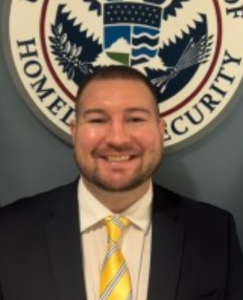
Cody Arigo currently works as a Correspondence Analyst in the Office of Strategy, Policy, & Plans for the U.S. Department of Homeland Security where he helps prepare materials, memoranda, and reports for high level officials. Cody served as a Teaching English as a Foreign Language (TEFL) Peace Corps volunteer in Kyrgyzstan from 2018 – 2020 where he learned Kyrgyz language to integrate into his Peace Corps host site and primary duties in Naryn Oblast, Kyrgyzstan. Cody studied Urdu at the University of Wisconsin Madison’s South Asia Summer Languag Institute and in Lucknow, Uttar Pradesh, India in 2023 through the Boren Fellowship’s South Asia Flagship Language Initiative (SAFLI). Cody has a Bachelor’s of Arts degree in History from Salisbury University and a Master’s of Public Policy from the University of Maryland.
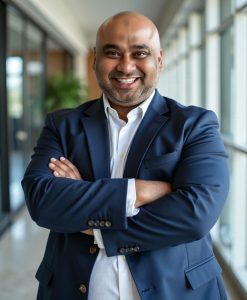
Dr. Raj Balkaran is a scholar of Sanskrit narrative literature, with academic-year Sanskrit training at the American Institute of Indian Studies in Pune. He serves on the Consultative Committee of the International Association of Sanskrit Studies and convenes the Purāṇa Section of the World Sanskrit Conference. He routinely leverages his Sanskrit training across three domains. In the scholarly sphere, it informs his academic publications, his university instruction, his adult-education teaching at the Oxford Centre for Hindu Studies, and his cross-sector research with the International Committee of the Red Cross on Hindu ethics of warfare. In public scholarship, it grounds his media interviews (CBC, BBC, The Wire), his public talks, and his hosting of the Indian Religions podcast on the New Books Network. In applied contexts, Sanskrit animates his teaching of texts, traditions, and Sanskrit itself at his own Indian Wisdom School, his yoga teacher training modules, and his popular educational book The Stories Behind the Poses. His work models the many modern applications of this ancient Indian tongue. Learn more at rajbalkaran.com.
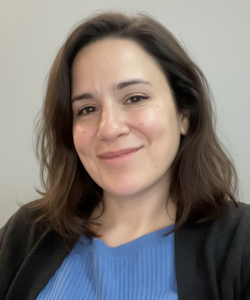
Tori Gross is Assistant Senior Instructional Professor of Anthropology and Assistant Director of MAPSS. She holds a PhD in Anthropology from Columbia University and an MA in Religious Studies from McGill University. Professor Gross’s research focuses on the affective dimensions of identity politics, the intersection of national imaginaries and neoliberal values, and the gendered production of parastate sovereignty in India. Her book manuscript, Hail to the Hero: Caste, Class, and Political Subjectivity in Contemporary South India, draws on two years of ethnographic and archival research in Tamil Nadu to examine novel caste identities and changing social relations that have emerged following the breakdown of rural regimes of caste hierarchy. The book illuminates how politically marginalized and newly urbanized communities accrue power through collective historical claims that function as strategic negotiations of status and rights with both other communities and the nation-state. She is currently developing a new project on the (trans)nationally aspirational underpinnings of growing support for Hindu nationalism in Tamil Nadu where it has historically fared poorly.

Dr. Vijay Limaye is an Adjunct Assistant Professor in the Department of Population Health Sciences and a Researcher in the Nelson Institute for Environmental Studies Center for Sustainability and the Global Environment. He supports classroom training of medical students on climate change and health topics and broader efforts to strengthen climate change and health content in course curricula across the UW campus. Dr. Limaye is a Senior Scientist at the Natural Resources Defense Council (NRDC), where he leads applied research on the significant health-related financial costs of climate change in the U.S. and directs work to improve resilience to climate hazards in India. He holds a B.A. in Environmental Sciences from the University of California-Berkeley and a joint Ph.D. in Epidemiology/Environment and Resources from the University of Wisconsin–Madison.
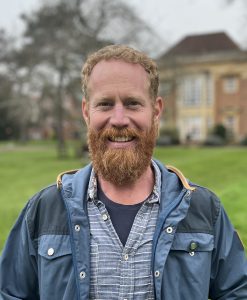
Galen Murton is an Associate Professor of Geography at James Madison University in Harrisonburg, Virginia and has broad research and teaching interests in the politics of international development. He first traveled to South Asia in 1998 as an undergraduate student with the University of Wisconsin’s College Year in Nepal Program and has returned to the region many times since then to teach, travel, and trek. His ongoing research projects examine the social and geopolitical implications of infrastructure development throughout the Himalayan borderlands of Highland Asia. This includes relations between China, Tibet, and Nepal but also wider interactions across overlapping regions of East Asia, South Asia, and Central Asia. He also studies local experiences with international aid in post-disaster landscapes and the impacts of Chinese aid and work programs at different scales. Related to these projects and his classroom instruction, he especially likes to teach and research with students in mountain regions of Asia and the Americas. Recent highlights include the co-direction of JMU study abroad programs to Nepal.
This session is co-sponsored by the UW–Madison Center for South Asia.